
Full blog content here…
The Complete Contact Center Technology Blueprint: Integrating Dialer, AI, CRM, and WFM for Peak Performance
In contact centers, old systems that work alone drag down your team’s speed and customer chats. You face a tough spot: keep costs low but still give each caller a smooth talk. That’s where blending dialer, AI, CRM, and WFM steps in. These tools form a tight team that boosts agent work and lifts customer joy. From my time handling dialers, WFM, and AI ops, I’ve seen how this mix turns chaos into clear wins. Let’s break down how to build this setup for your center. Section 1: The Foundation – Modern Dialer Capabilities in the AI Era Dialers today go way past just ringing phones. They act as the main switch that links agents to customers and pulls in fresh data. In my work, I’ve set up dialers that cut wait times by half just by smart routing. Intelligent Preview and Predictive Dialing Algorithms Think of preview dialing as letting agents peek at a customer’s full story before the call hits. Predictive versions take it further with math that spots when someone’s likely to pick up. These smart setups now mix in live signs like a customer’s past buys or app use. They also watch for rules, like skipping do-not-call lists to stay legal. List handling keeps your calls fresh by sorting contacts into groups. Saturation controls stop overload by matching dial speed to agent spots. One team I helped saw connect rates jump 20% after tweaking these for peak hours. You get fewer drops and more real talks. Seamless Integration with Real-Time Agent Status Dialers link tight with WFM and CRM to check agent load right away. If staff dips low, the dialer slows outbound calls. This tie sends key facts to the agent’s screen the second a call connects. I’ve fixed setups where this sync was off, leading to rushed agents missing details. Now, with real-time checks, agents grab context fast—like recent complaints from CRM. It cuts errors and builds trust in every chat. Compliance and Robust Reporting Metrics Go beyond simple connect stats when you check dialer work. Track how well it skips DNC lists and follows regs like TCPA. Set up reports that flag issues early, like high abandon rates. In practice, audit weekly to spot patterns. One fix I did dropped compliance fines by 30%. Use these metrics to tweak dials and keep your center safe and smooth. Section 2: Powering Personalization with AI and Machine Learning AI turns piles of data into tips your agents can use right now. It handles boring jobs so people focus on tough talks. From my ops role, AI has slashed routine queries by 40%, letting teams shine on big issues. Conversational AI: Voicebots and Chatbots for Tier 0 Support Voicebots answer basic asks, like account balances, without a human jump-in. Chatbots do the same for texts or emails. Place them first to handle easy stuff and save agent time for deep needs. I’ve rolled out bots that cut call volume by 25%. They learn from chats to get better, spotting patterns like common billing mix-ups. Customers love the quick fixes, and your queue stays short. Agent Augmentation: Real-Time Guidance and Sentiment Analysis AI listens to calls or scans chats to guide agents live. It pops up next steps, like “Ask about their last buy,” or warns on upset tones. Auto notes save time on wrap-ups. Sentiment tools read voice pitch or word choice to flag hot moments. In one setup I managed, this boosted upsell hits by 15%. Agents feel backed, not watched, leading to sharper service. Optimizing Data Flow Between AI and CRM AI sorts call goals fast and updates CRM records on the spot. Say a customer vents about a delay—AI tags it and adds notes for future calls. This keeps every talk starting strong. I’ve seen teams waste hours fixing bad data flows. Clean links mean CRM holds true info, like intent scores from AI. It cuts repeat calls and builds loyalty. For more on top AI options, check best AI tools. Section 3: The Central Nervous System – CRM as the Single Source of Truth CRM sits at the core, sharing data with dialer, AI, and WFM. It builds full customer views so no detail slips. In my experience, strong CRMs cut swivel-chair time between apps, saving agents 10-15 minutes per shift. Unified Agent Desktop Experience (The 360-Degree View) Screen-pops bring CRM info to the agent’s main view when a call lands. No more app hopping—just one spot for history, notes, and scripts. This setup speeds talks and drops mistakes. I’ve trained teams on this; it feels like having a co-pilot. Full views show past chats, prefs, and open cases. Efficiency soars when data lives in one place. Closed-Loop Feedback for Campaign Optimization Log sales wins in CRM, and it tweaks dialer targets or WFM plans. A failed pitch? It flags weak lists for quick fixes. This loop sharpens every push. One campaign I oversaw used this to lift close rates by 18%. Feedback flows back to spot trends, like best call times from data. Automating Data Enrichment and Case Creation CRM workflows add details auto, like linking a call to a support ticket. Post-chat codes from dialer trigger tasks, such as follow-ups. It keeps things moving without manual work. Tip: Set rules for dispositions like “needs callback” to spawn cases. In my ops, this halved loose ends and pleased customers more. If you’re picking a CRM, see top CRMs for small business. Section 4: The Efficiency Engine – Workforce Management (WFM) Synchronization WFM goes beyond shift plans— it predicts needs from dialer and CRM flows. It matches staff to job complexity via AI scores. From hands-on tweaks, I’ve cut overstaffing by 22% with this sync. Accurate Forecasting Driven by Dialer/CRM Data Streams Old forecasts used past months; now pull in live campaign sizes, AI deflection, and talk times. Dialer volumes and CRM trends feed models for spot-on guesses. I’ve built forecasts that factor bot handles, slashing surprises. One center I helped avoided 15%
WFM Career Guide – Skills, Tools, and Growth Opportunities
The contact center industry is one of the fastest-growing employment sectors in India. With the rise of customer experience (CX) as a business priority, Workforce Management (WFM) has become a critical function. Companies are not just hiring agents—they are investing heavily in professionals who can forecast demand, optimize staffing, and improve operational efficiency. If you’re looking for a career in WFM, Dialer Management, or call center operations, this guide will help you understand the essential skills, tools, and growth opportunities available. What is Workforce Management (WFM)? Workforce Management is the process of forecasting, scheduling, and monitoring staff to ensure that customer service operations run smoothly. In call centers, WFM ensures that the right number of agents are available at the right time to meet service level agreements (SLAs). WFM professionals play a key role in balancing customer experience, employee satisfaction, and cost efficiency. Why Choose a Career in WFM? High Demand in India and Globally – With thousands of call centers operating, skilled WFM professionals are always needed. Critical Business Role – WFM is not just back-office—it directly impacts revenue and customer satisfaction. Career Growth – Roles start from WFM Analyst to WFM Manager and even Operations Head. Transferable Skills – WFM skills are valuable across industries like banking, telecom, healthcare, and e-commerce. Key Skills Required for a WFM Career 1. Analytical Thinking Ability to forecast call volumes and predict staffing needs. Use of historical trends and real-time data for decision-making. 2. Technical Knowledge Familiarity with dialer systems (Vicidial, Genesys, Ameyo). Knowledge of CRM tools (Zoho CRM, Salesforce). 3. Excel & Data Visualization Proficiency in Advanced Excel (pivot tables, macros). Use of Power BI or Tableau for reporting. 4. Communication & Collaboration Coordinating between operations, HR, and clients. Explaining complex reports in simple terms. 5. Compliance Awareness Understanding TRAI, DoT, and DNC regulations for call centers. Ensuring campaigns are run within legal frameworks. Essential WFM & Dialer Tools IEX – Forecasting & scheduling. Genesys WFM – Enterprise-level workforce optimization. Blue Pumpkin – Classic WFM solution. Vicidial, Ameyo, Five9 – Dialer tools for outbound campaigns. Zoho CRM + Telephony – Small to mid-size call center integration. MS Excel & Power BI – Custom reporting and analytics. 💡 Tip: For a strong WFM career, learn at least 2–3 dialer platforms and 1 reporting tool (Excel or Power BI). Career Path in WFM & Dialer Management WFM Analyst / Real-Time Analyst (RTA) Entry-level role, handling reports and real-time monitoring. Dialer Executive / Dialer Analyst Focuses on setting up campaigns, pacing ratios, and compliance. WFM / Dialer Team Leader Supervises analysts, coordinates with operations, ensures SLA delivery. Assistant Manager / Manager – WFM Responsible for forecasting, scheduling, client reporting, and performance improvement. Senior Manager / Head of Workforce Management Strategic role, manages multiple sites or regions. 💡 In India, salaries can range from ₹3 LPA (entry-level) to ₹20+ LPA (senior WFM leaders), depending on experience and tools expertise. Growth Opportunities in Workforce Management AI & Automation – Learning AI-driven WFM tools and voice bots. Global Roles – Many MNCs hire WFM experts in India for managing global contact centers. Consulting / Freelance – WFM specialists are also in demand as consultants for call center optimization. Cross-Industry Opportunities – Beyond BPOs, banks, hospitals, and e-commerce firms need WFM experts. Tips to Start or Grow Your WFM Career Build Technical Skills – Master Excel, BI tools, and 2–3 dialer systems. Earn Certifications – Six Sigma, WFM software certifications, or AI/analytics courses. Gain Hands-On Experience – Start with analyst roles and grow towards management. Network Professionally – Connect with WFM leaders on LinkedIn and join CX communities. Stay Updated – Follow TRAI/DoT regulations and global call center compliance standards. Conclusion A career in Workforce Management (WFM) is more than just scheduling—it’s about driving efficiency, customer satisfaction, and business growth. With the right skills, tools, and mindset, WFM professionals can build long-term, rewarding careers in India and globally. 👉 Are you exploring a WFM career or looking for a Dialer Manager in India to optimize your call center operations? Connect with me on LinkedIn or visit akshaygawade.in to learn more about my journey and expertise in workforce management jobs, dialer management, and call center optimization.
How to Improve Call Center Connect Ratio – Proven Dialer Strategies
One of the biggest challenges in outbound calling is getting customers to actually pick up the phone. Even the most skilled agents cannot perform well if calls don’t connect. This is why improving the connect ratio is one of the most important goals in call center optimization. In this blog, we’ll explore: What connect ratio means Why it matters for contact center efficiency Common reasons for low connect ratio Proven dialer strategies to improve performance How to reduce drop rates while maintaining compliance Real-life examples from dialer management experience What is Connect Ratio in Call Centers? Connect Ratio = (Connected Calls ÷ Dialed Calls) × 100 It measures how many of your outbound dialed calls actually connect with a live customer. A high connect ratio means your data, dialer strategy, and call timing are well optimized. A low connect ratio indicates wasted effort, low productivity, and unhappy clients. 💡 Example: If your team dials 1,000 numbers but only 250 customers answer, your connect ratio is 25%. Why is Connect Ratio Important? Agent Productivity – Low connections waste agent time. Customer Experience – More live connects mean more meaningful conversations. Revenue Impact – Higher connect ratio directly increases sales, collections, or lead generation. Operational Costs – Reduces wasted dialing and telecom costs. Common Reasons for Low Connect Ratio Calling customers at the wrong time of day Poor data quality (wrong numbers, outdated lists) Excessive retries leading to call blocking Incorrect dialer pacing ratio Ignoring regional regulations (TRAI/DoT or DNC lists) Network or carrier-related issues Proven Dialer Strategies to Improve Connect Ratio 1. Optimize Dialing Time Analyze historical data to find the Best Time to Call (BTC). For example, in B2B campaigns, late mornings or early afternoons work better. In B2C, evenings often give higher connection rates. 2. Clean & Segment Your Data Use only valid, updated numbers. Segment by geography, customer type, and previous interaction history. Example: In one of my projects, cleaning 20% of bad data increased the connect ratio by 15% in just two weeks. 3. Fine-Tune Dialer Pacing Ratio Predictive dialers must be carefully tuned: Over-dialing → increases drop rate. Under-dialing → wastes agent time. Regularly monitor pacing logic to balance compliance and efficiency. 4. Use Multiple Dialing Modes Predictive Dialer → High volume, fast campaigns. Progressive Dialer → Balanced approach, lower drop rates. Preview Dialer → Complex cases where context is key.💡 Choose the mode based on campaign type, not just speed. 5. Leverage Call Routing & Skill-Based Assignment Assign the right calls to the right agents. Example: Assign high-value leads to your best performers for maximum conversion. 6. Reduce Drop Rate Drop rates happen when a customer answers, but no agent is available. To reduce drop rate: Control pacing ratio Ensure agent availability matches dialer speed Regularly audit retry logic 7. Monitor Real-Time Performance Use dashboards (Vicidial, Genesys, Ameyo, Zoho CRM) to: Track connect ratios hourly Adjust strategy in real time Spot issues early (e.g., sudden carrier blockages) 8. Train & Motivate Agents Even with the best dialer, poorly trained agents waste connects. Train them on: Quick greetings (reduces hang-ups) Effective call scripts Handling objections Real-Life Example of Connect Ratio Improvement At one campaign, the connect ratio was stuck at 18%. After analyzing data, we: Cleaned the database (removed invalid numbers) Adjusted pacing ratio Shifted calling hours to evenings The connect ratio improved to 25% within a month, while drop rates fell by 10%. This not only boosted sales but also reduced telecom costs significantly. Best Practices to Maintain High Connect Ratios Review performance daily/weekly. Run A/B testing on call timings. Refresh leads regularly to avoid number fatigue. Align dialer settings with compliance guidelines. Always balance quantity (connects) with quality (conversations). Conclusion Improving the call center connect ratio is not about dialing more numbers—it’s about dialing smarter. With the right mix of data hygiene, pacing logic, dialer strategies, and agent training, contact centers can achieve higher efficiency and customer satisfaction. Remember: A higher connect ratio means more conversations, more conversions, and stronger business growth. 👉 Are you looking for a Dialer Manager or WFM Expert who can help you improve connect ratio, reduce drop rate, and optimize call center performance? Connect with me on LinkedIn or visit akshaygawade.in to learn more.
Top 10 Contact Center Tools Every Dialer Manager Should Know
Managing a contact center is no easy task. Between handling call volumes, ensuring compliance, and monitoring agent productivity, dialer managers rely heavily on powerful tools to keep operations running smoothly. From dialer platforms to CRM integrations and reporting dashboards, the right set of tools can significantly improve contact center efficiency. In this blog, we’ll explore the top 10 contact center software solutions every dialer manager should know. 1. Vicidial Type: Open-source dialer software One of the most widely used call center tools worldwide. Supports inbound, outbound, and blended campaigns. Real-time agent monitoring, predictive dialing, and IVR (Interactive Voice Response).💡 Why it matters: As a free yet powerful tool, Vicidial is perfect for startups and mid-size businesses looking to scale. 2. Genesys Cloud Type: Enterprise-grade contact center software Provides predictive dialer, workforce management, and omnichannel support. Real-time analytics and AI-driven customer insights. Strong compliance features for global campaigns.💡 Why it matters: Ideal for large enterprises with complex contact center operations and global presence. 3. Ameyo Type: Cloud-based dialer & CRM integration Focuses on regulatory compliance (TRAI/DoT in India). Supports predictive, preview, and progressive dialing modes. Strong reporting and monitoring features.💡 Why it matters: Best suited for businesses in India and Asia-Pacific looking for robust compliance with scalability. 4. Zoho CRM with Telephony Integration Type: CRM + Contact Center Integration Allows click-to-call, call logging, and customer data sync. Integrates with multiple dialer platforms. Provides a 360° view of customer interactions.💡 Why it matters: Perfect for small to mid-size businesses combining CRM and dialer management. 5. Five9 Type: Cloud contact center solution Predictive and power dialers. Workforce optimization tools. Advanced IVR and AI-assisted routing.💡 Why it matters: Excellent for scaling outbound sales and customer support campaigns. 6. Avaya Contact Center Type: Enterprise contact center software Strong in telephony infrastructure and omnichannel routing. Reliable for inbound call centers with complex routing needs. Provides real-time reporting and WFM capabilities.💡 Why it matters: Still a popular choice for enterprises with legacy systems upgrading to digital-first solutions. 7. Cisco Unified Contact Center Type: Enterprise-grade contact center platform Secure and highly reliable, integrates with Cisco telephony. Advanced routing, IVR, and workforce optimization. Scalable for thousands of agents.💡 Why it matters: Chosen by large organizations that prioritize security and uptime. 8. Exotel Type: Cloud telephony solution Simple and scalable, widely used in India. Provides virtual numbers, IVR, and call recording. Works well for SMEs and startups.💡 Why it matters: A budget-friendly option for businesses looking to modernize their customer communication. 9. Freshdesk Contact Center (formerly Freshcaller) Type: Cloud-based call center software Easy setup, intuitive dashboards. Supports global numbers and call routing. Integration with Freshdesk CRM for omnichannel support.💡 Why it matters: Great for small businesses focusing on customer support efficiency. 10. Talkdesk Type: Cloud-native contact center solution AI-powered routing and analytics. Easy integration with Salesforce, Zendesk, and other CRMs. High flexibility for remote or hybrid contact centers.💡 Why it matters: Perfect for businesses adopting AI-driven customer engagement. Quick Comparison Table Tool Best For Key Feature Vicidial SMEs, startups Open-source predictive dialer Genesys Large enterprises AI + omnichannel contact center Ameyo Asia-Pacific businesses Regulatory compliance (TRAI/DoT) Zoho CRM SMEs CRM + telephony integration Five9 Mid to large businesses Workforce optimization + AI routing Avaya Legacy enterprises Strong telephony infrastructure Cisco UCC Large enterprises Secure, scalable, advanced routing Exotel SMEs, startups Virtual numbers + IVR Freshdesk Small businesses Easy setup + global support Talkdesk Modern AI-driven centers AI + CRM integrations Why These Tools Matter for Dialer Managers A dialer manager’s role is not just about dialing—it’s about maximizing efficiency, compliance, and customer satisfaction. These tools help in: Increasing connect ratio Reducing drop rates Enhancing real-time monitoring Providing better customer insights Ensuring regulatory compliance Conclusion Choosing the right contact center software depends on your organization’s size, industry, and compliance needs. From Vicidial and Ameyo for cost-effective campaigns to Genesys and Cisco for enterprise-level operations, every dialer manager must be familiar with these tools to stay ahead. In today’s customer-first world, knowing these top 10 call center tools can give businesses a competitive edge. 👉 If you are looking for a Dialer Manager or WFM Expert who knows how to leverage tools like Vicidial, Genesys, Ameyo, and Zoho CRM to optimize performance—connect with me on LinkedIn or visit akshaygawade.in.
How Workforce Management (WFM) Improves Call Center Performance
In the competitive world of customer service, every second counts. Customers want faster resolutions, while businesses need to control costs and improve efficiency. This is where Workforce Management (WFM) becomes a game-changer for call centers. From scheduling agents to forecasting demand, WFM helps contact centers strike the right balance between service quality and operational efficiency. In this blog, we’ll explore: What Workforce Management is Why WFM is critical for call centers Key WFM tools and technologies Benefits of WFM for efficiency and performance Real-life examples from contact center operations Best practices to implement WFM successfully What is Workforce Management (WFM)? Workforce Management (WFM) is the process of forecasting, scheduling, monitoring, and optimizing workforce resources to meet customer demand. In a call center, WFM ensures that: The right number of agents are scheduled at the right time Service levels (SLAs) are achieved without overstaffing Agents remain productive while maintaining work-life balance Simply put, WFM is about having the right people, in the right place, at the right time. Why WFM is Critical in Call Centers Call centers often face challenges like: High call volume during peak hours Long wait times affecting customer satisfaction Understaffing or overstaffing issues Low agent utilization and burnout A robust call center WFM strategy ensures accurate demand forecasting, real-time adjustments, and better employee engagement. 💡 Example: In one of my roles as a WFM Manager, we implemented smarter scheduling using real-time analytics. This helped maintain 80% of calls answered within 20 seconds, even during seasonal spikes. Key WFM Tools for Call Centers Modern contact centers use a variety of WFM tools to improve efficiency: IEX – For forecasting and scheduling agents. Genesys WFM – Cloud-based workforce planning with real-time monitoring. Blue Pumpkin – Early WFM software widely used for staffing optimization. Zoho CRM + WFM integration – For combining CRM data with workforce planning. Excel & Power BI – Custom reporting and data visualization. These tools provide dashboards, forecasting models, adherence monitoring, and compliance tracking—helping managers make data-driven decisions. Benefits of Workforce Management in Call Centers 1. Improved Efficiency Accurate forecasting prevents under/overstaffing, ensuring agents spend more time handling calls and less time idle. 2. Better Customer Experience WFM ensures reduced wait times and faster resolutions, leading to higher Customer Satisfaction (CSAT) and Net Promoter Scores (NPS). 3. Cost Optimization By avoiding overstaffing, WFM directly reduces payroll costs while maintaining service levels. 4. Employee Satisfaction Smart scheduling respects agent availability and preferences, reducing burnout and attrition. 5. Real-Time Flexibility WFM allows real-time monitoring and intraday adjustments to handle unexpected spikes in call volume. Real-Life Example of WFM in Action During a campaign integration project, I managed a virtual team of 92+ agents across India. By using WFM tools like IEX and Genesys, we: Improved adherence by 20% Reduced idle time through better scheduling Handled increased volumes post-merger without hiring additional agents The result? Service levels were consistently met, and management received clear, actionable reports on agent productivity and campaign performance. Best Practices in WFM for Call Centers Use Historical Data for Forecasting – Analyze seasonal trends, campaigns, and holidays. Enable Real-Time Monitoring – Track agent adherence and adjust staffing instantly. Incorporate Omnichannel Planning – Plan for calls, chats, emails, and social media. Invest in Agent Training – Teach agents to multitask across channels to increase flexibility. Leverage Automation – Use AI and WFM tools to generate smarter schedules. Balance Efficiency with Empathy – Don’t focus only on metrics; agent well-being is key. Conclusion Workforce Management (WFM) is more than just scheduling—it’s the backbone of contact center efficiency. With the right WFM tools, call centers can achieve higher productivity, improved customer satisfaction, and reduced costs. In today’s customer-centric world, businesses that master WFM gain a competitive advantage by delivering faster, more efficient, and personalized service. Are you looking for a Workforce Management or Dialer Expert to help optimize your call center performance? 👉 Connect with me on LinkedIn or visit akshaygawade.in to learn more about my experience with WFM, dialer management, and contact center efficiency.
What is Dialer Management? Complete Guide to Predictive, Preview & Progressive Dialers
In today’s fast-paced contact center industry, efficiency and compliance are the two biggest challenges. Customers expect quick resolutions, and businesses need to maximize agent productivity while following telecom regulations. This is where dialer management plays a critical role. A dialer is not just a tool—it is the backbone of modern contact centers. Whether it’s sales, collections, or customer support, the right dialer strategy ensures higher connect ratios, reduced idle time, and improved customer experience. In this blog, we will explore: What dialer management is Types of dialers (Predictive, Preview, Progressive) Benefits of each type Best practices in dialer management Real-life examples from industry experience Top contact center dialer tools What is Dialer Management? Dialer management refers to the process of planning, configuring, monitoring, and optimizing dialer systems in contact centers. It involves: Setting up campaigns and call strategies Assigning agents based on skills Monitoring connect ratio, drop rate, and call quality Ensuring compliance with regulations like TRAI (in India) or DNC (internationally) Continuously optimizing dialing logic for better performance A well-managed dialer ensures that the right customer is contacted at the right time, increasing productivity and improving the customer journey. Types of Dialers 1. Predictive Dialer A predictive dialer uses algorithms to dial multiple numbers at once and connects answered calls to available agents. It predicts agent availability using historical data and real-time performance. Advantages: High efficiency (more calls per hour) Reduces agent idle time Best for large-scale outbound campaigns (sales, collections, lead generation) Challenges: Risk of higher drop rates if not configured properly Strict compliance needed with regulatory guidelines 💡 Example: In one of my past roles, by fine-tuning retry logic and pacing ratio on a predictive dialer, I was able to improve connect ratio by 25% while reducing drop rates. 2. Preview Dialer A preview dialer provides the agent with customer information before making the call. The agent decides when to dial, ensuring they are prepared with context. Advantages: Higher quality conversations Better for complex sales or customer service interactions Reduces customer complaints as agents are better informed Challenges: Slower than predictive dialers May not suit high-volume campaigns 💡 Example: For a financial services campaign, we used a preview dialer so agents could study customer history before calling. This resulted in better first-call resolution (FCR) and higher customer satisfaction. 3. Progressive Dialer A progressive dialer automatically dials the next number only when an agent becomes available. Unlike predictive dialers, it doesn’t guess availability—it connects one call at a time. Advantages: Balanced approach (better than manual dialing, safer than predictive) Lower drop rates compared to predictive dialers Good for mid-size campaigns Challenges: Slightly less efficient than predictive Agents may still face idle time in low-volume scenarios 💡 Example: In an insurance renewal campaign, we used a progressive dialer. It helped us maintain 80% SLA compliance while ensuring customers were not disconnected due to over-dialing. Comparison Table: Predictive vs Preview vs Progressive Dialers Feature Predictive Dialer Preview Dialer Progressive Dialer Speed Very High Low Medium Call Quality Medium High High Drop Rate Risk High Very Low Low Best For High-volume sales Complex cases Balanced campaigns Agent Preparation Time Minimal Maximum Moderate Best Practices in Dialer Management Optimize pacing ratio – Don’t over-dial, balance efficiency and compliance. Monitor KPIs regularly – Connect ratio, drop rate, average handling time (AHT). Segment data smartly – Prioritize leads by geography, time zone, and customer type. Use compliance filters – Always respect DNC lists and TRAI/DoT guidelines. Train agents effectively – Even the best dialer cannot succeed if agents aren’t skilled. Leverage reports & analytics – Use dashboards from tools like Genesys, Vicidial, or Ameyo to take data-driven decisions. Top Contact Center Dialer Tools Some of the most popular contact center dialer tools are: Vicidial – Open-source, widely used for outbound campaigns. Genesys Cloud – Enterprise-grade platform with omnichannel features. Ameyo – Indian-origin dialer, strong in regulatory compliance. Five9 – Cloud-based dialer with strong predictive dialing features. Zoho CRM with Telephony Integration – Good for SMEs managing sales campaigns. Why Dialer Management is a Career Skill In modern BPOs and contact centers, dialer management is no longer just a technical role—it’s a strategic one. Companies expect dialer managers to: Drive efficiency through innovation Ensure compliance Collaborate with training, QA, and operations Report actionable insights to leadership Professionals with expertise in dialer management, WFM, and compliance are in high demand. Dialer management is the backbone of successful contact centers. By understanding the differences between predictive, preview, and progressive dialers, businesses can choose the right strategy for their campaigns. As someone with hands-on experience in managing large-scale dialer operations, I can confidently say that dialer management is not just about technology—it’s about balancing efficiency, compliance, and customer satisfaction. Are you looking for a Dialer Manager or WFM Expert who can optimize your campaigns and improve customer experience? Connect with me on LinkedIn or visit my website akshaygawade.in to know more.
The Future of Outbound Calling: Why Smart Businesses Are Switching to Dialer Automation
Expert Perspective by Akshay Gawade In the era of speed, smart data, and automation—manual dialing is obsolete. Outbound calling has evolved, and businesses that rely on traditional systems are losing time, customers, and revenue. The solution? Dialer automation. From sales to collections to customer retention, switching to an intelligent dialer system doesn’t just improve operations—it reshapes the entire customer communication experience. Akshay Gawade, a dialer optimization expert who has implemented systems for BPOs, fintechs, and service companies, explains: “Dialer automation isn’t the future—it’s the present. Every second you delay is a lead you lose or a competitor you empower.” ⚙️ What Is Dialer Automation? Dialer automation refers to the use of smart dialing software that: Automatically dials numbers Connects only answered calls to live agents Integrates with CRMs Tracks performance in real time Follows compliance guidelines It removes human error and inefficiency from outbound campaigns—letting agents focus on results. 🚀 5 Reasons to Switch to Dialer Automation Now 1️⃣ Triple Your Call Output Automated dialers increase the number of live calls an agent can handle per day—up to 3–4x more than manual dialing. 2️⃣ Personalize Every Conversation With real-time CRM integration, agents are armed with client history, notes, and preferences—leading to better interactions and higher conversions. 3️⃣ Track Everything, Improve Fast Dialer systems offer detailed reporting: Call status Agent KPIs Campaign performance ROI analytics This helps managers make fast, data-driven decisions. 4️⃣ Save Time & Lower Costs No more phone lines, bulky infrastructure, or manual processes. With cloud-based dialers, you cut down costs while scaling outreach. 💡 Insight: “One smart dialer setup can do the work of five agents—without the payroll.” 5️⃣ Stay Legally Compliant Dialers come equipped with: Do Not Call (DND) filters Call recording TCPA/GDPR compliance Consent-based workflows This ensures smooth operations without legal risk. 🧠 Bonus: AI-Powered Dialers Are the Next Step Dialer automation is getting smarter every day with AI-powered lead scoring, speech analytics, and automated callbacks. These tools help you connect with: The right lead at the right time With the right message 🔧 Real Success Story A mid-size digital lending firm implemented a smart dialer system with Akshay Gawade’s support. The result in 60 days: Agent idle time reduced by 70% Monthly lead conversions grew by 42% Call center cost dropped by ₹1.8 lakhs ✅ Final Thoughts If your business depends on outbound communication, switching to dialer automation is no longer optional—it’s essential. You’ll get: More customer conversations Lower costs Higher sales Full performance visibility 100% compliance And when configured and optimized by a dialer pro like Akshay Gawade, the transition is smooth, scalable, and instantly impactful. 📩 Ready to Automate Your Dialing Process? Book a free consultation with Akshay Gawade to build or improve your call center’s automation system. 💼 Website: www.solutionzilha.com / www.akshaygawade.in 💬 “Your team shouldn’t be dialing. They should be closing.”
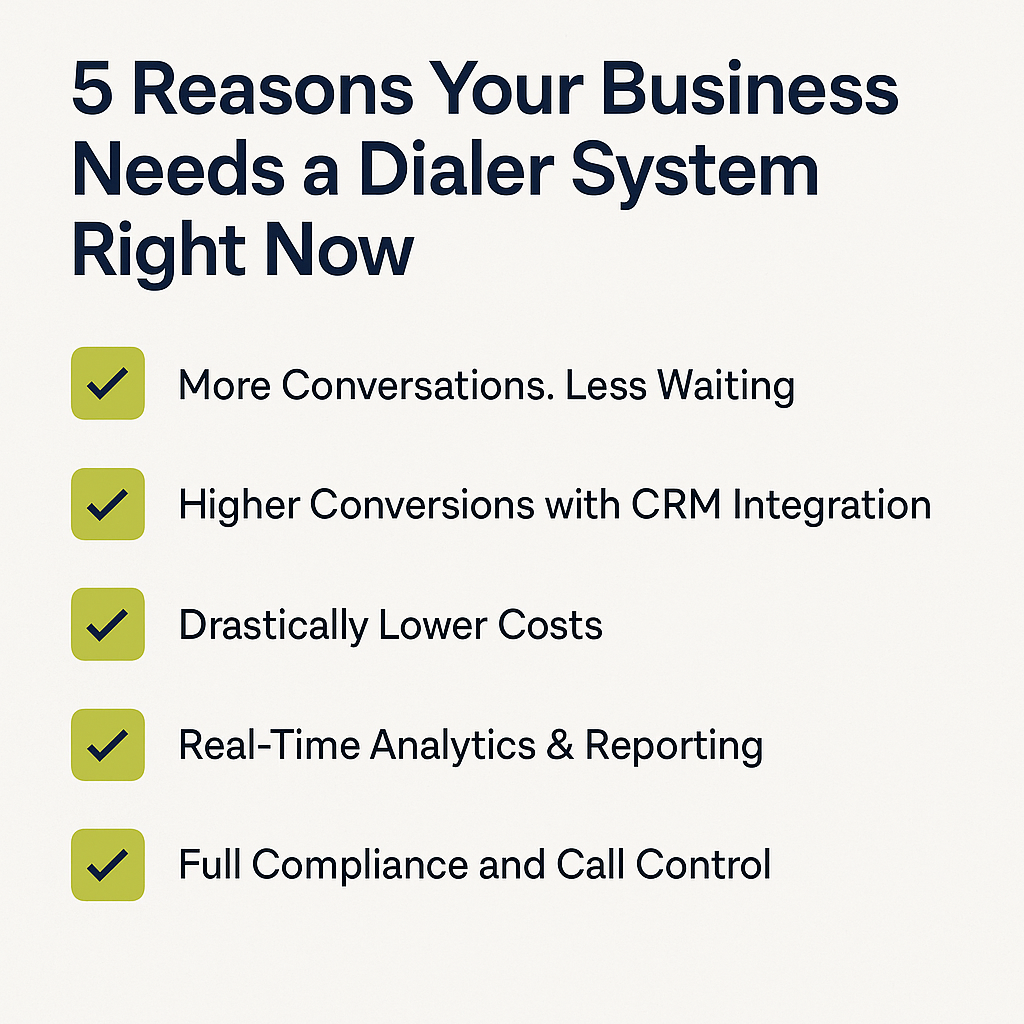
5 Reasons Your Business Needs a Dialer System Right Now
Akshay Gawade explains how to unlock growth through automation In a world where time is money and customer attention spans are short, businesses can no longer afford to waste precious minutes on manual dialing or disconnected workflows. Whether you’re a growing startup, a lead-gen agency, or a customer service powerhouse—a dialer system is no longer optional. It’s essential. Akshay Gawade, a seasoned dialer operations and optimization expert, shares: “The difference between surviving and scaling in today’s market is automation. And it starts with your dialer.” Let’s explore 5 clear, proven reasons why your business needs a dialer system—right now. ✅ 1. More Conversations. Less Waiting. Traditional dialing eats up hours in wait time. A predictive or power dialer ensures your agents are constantly connected to live calls, boosting productivity and morale. 🎯 Dialer Benefit: Up to *3X more live calls per day per agent ✅ 2. Higher Conversions with CRM Integration Modern dialers integrate with your CRM, giving agents real-time access to customer data—so every call is smart, relevant, and more likely to close. 📈 Akshay Gawade’s Tip: “Set up click-to-call from CRM for instant dialing, auto-logging, and follow-up tagging.” ✅ 3. Drastically Lower Costs No more investing in bulky hardware or massive support teams. Cloud dialers and VoIP systems run on the internet, letting you scale outreach without scaling expenses. 💡 Result: Save up to 50% on operational costs while increasing efficiency. ✅ 4. Real-Time Analytics & Reporting Dialers come with dashboards and insights—so you know: Who your best agents are Which campaigns are working Where to make improvements—instantly ✅ 5. Full Compliance and Call Control With features like: Call recording DND filtering Call whisper & barge-in TCPA/GDPR compliance tools Dialer systems protect you from legal risks while maintaining full transparency. 🔐 Akshay Gawade says: “With built-in compliance features, businesses gain trust and avoid penalties.” 🌟 Final Thoughts: Don’t Just Call—Scale Smartly If you’re still relying on manual calls or spreadsheets, it’s time for a change. The modern business battlefield is automated, data-driven, and fast. A dialer system gives you the power to scale, convert, and grow. And with the right expert like Akshay Gawade to help you configure, optimize, and scale your system—you’re set for long-term success. 📩 Need help choosing or setting up a dialer?Connect with Akshay Gawade for expert support and tailored solutions for your business. 🖥️ Let your dialer work for you—so your team can focus on closing, not chasing.
How to Use a Dialer System in a Call Center for Business Growth
Insights from Akshay Gawade, Dialer Operations & Optimization Expert In today’s business world, where customer interaction speed and service quality define success, call centers play a crucial role in driving growth. But a call center without a proper dialer system is like a car without an engine—slow, inefficient, and outdated. That’s where predictive dialers, auto dialers, and cloud-based dialing solutions come in. With deep domain knowledge, Akshay Gawade, a dialer operations and optimization expert, emphasizes that: “A dialer system isn’t just a calling tool—it’s a growth enabler that transforms call centers into result-driven powerhouses.” 📞 What is a Dialer System? A dialer system is a software solution designed to automate outbound and inbound calling. It intelligently dials numbers from a contact list, skips unanswered or busy lines, and connects only live calls to agents—saving time and increasing productivity. 🔹 Common Types of Dialers: Predictive Dialer – Auto-dials multiple numbers and predicts agent availability Auto Dialer – Dials numbers sequentially and connects live calls Power Dialer – Dials one number per agent to ensure compliance Progressive Dialer – Calls only after the agent is ready 🚀 Why Every Growing Business Needs a Dialer System Here’s how a dialer system, when optimized correctly, can contribute to scalable business growth: 1️⃣ Maximize Agent Efficiency A predictive dialer significantly reduces agent idle time by ensuring they are constantly connected to live calls. “Using a predictive dialer can triple your agent’s daily call volume while maintaining conversation quality.”— Akshay Gawade 2️⃣ Boost Lead Conversions Dialers integrated with CRM platforms allow agents to access real-time customer data, leading to more personalized conversations and higher closure rates. 3️⃣ Reduce Operational Costs Cloud-based and VoIP dialer systems remove the need for large infrastructure or telephone lines, drastically cutting costs. “Smart dialer systems help startups scale like enterprises—without needing enterprise budgets.”— Akshay Gawade 4️⃣ Gain Real-Time Insights Modern dialers offer built-in dashboards for: Agent performance tracking Call analytics Campaign optimization ROI analysis 5️⃣ Ensure Legal Compliance Dialer systems support: TCPA and DND compliance Call recordings Dispute management logs 📈 How a Dialer Accelerates Business Growth A growing business needs speed, accuracy, and adaptability. A dialer system brings exactly that. Benefits: 📌 Higher customer reach per day 📌 Consistent follow-ups 📌 Data-driven decision-making 📌 Better agent satisfaction 📌 24/7 scalability with cloud solutions 👨💼 Expert Spotlight: Akshay Gawade With 8+ years of hands-on experience in dialer configuration, campaign automation, and call center scaling, Akshay Gawade has helped multiple companies increase their calling efficiency by over 60%. He specializes in: Predictive Dialer Implementation Cloud-based Call Center Setup CRM + Dialer Integration AI-Driven Call Routing Optimization “Dialers should be smart, not just fast. The right system, in the right hands, is a business transformation tool.”— Akshay Gawade ✅ Final Thoughts A dialer system is no longer optional for any business that handles customer calls—it’s a necessity. Whether you want to: Increase sales Improve support Boost productivity Lower costs Scale your operations — a predictive or cloud dialer can help you achieve it. 🔧 Need Help Setting Up or Optimizing Your Dialer? Akshay Gawade offers consultation and support for businesses looking to install, optimize, or scale dialer operations. 📩 Get in touch with Akshay Gawade today to build a smart and scalable call center solution for your business.